
Last updated October 31, 2026
 Home additions & ADU
 Kitchen remodeling
 Bathroom remodeling
 Roofing
 Windows & doors
 Driveway & pavers
 Fence
Free written scope consultation - allowances, timeline, and change-order rules on paper before a single trade is scheduled
Construction Emergency Preparedness Guide for Temecula Homes
The Elsinore Fault runs within five miles of central Temecula. The eastern Wine Country parcels carry High fire-hazard severity designations. The arroyos feeding Murrieta Creek can move water fast enough to undercut foundations during atmospheric river events. Three distinct risks, and most preparedness guides treat them as separate checklists. That’s the problem. A fire weakens a roof, a quake cracks the slab, a flood saturates the soil, and suddenly you’re not dealing with three isolated hazards. You’re dealing with one cascading failure. This guide builds an integrated preparedness framework around Temecula’s specific hazard profile, focused on construction decisions you can make now to reduce damage from all three.
Quick Answer
Home emergency preparedness in Temecula means hardening your house against three overlapping threats: seismic activity from the Elsinore Fault Zone, wildfire exposure in the city’s eastern High fire-hazard severity zones, and flash flooding along Murrieta Creek, Warm Springs Creek, and the arroyos that drain the Wine Country basin. The most effective approach is multi-hazard construction: seismic retrofits that also anchor ember-resistant siding, roofing materials that resist both fire and wind-driven rain, and drainage systems sized for the 100-year storm rather than typical winter rainfall. Start with a structural assessment, then prioritize Cripple wall retrofits, water heater strapping, and Class A roofing.
Styles & brands we work with
Table of Contents
- Understanding the Elsinore Fault Zone and Seismic Risk
- Wildfire Hardening for Temecula’s Eastern VHFHSZ Zones
- Flood and Drainage Preparedness for Murrieta Creek and Wine Country Arroyos
- Multi-Hazard Materials: Systems That Perform Across Fire, Seismic, and Water Events
- Cripple Wall Retrofitting: What Temecula Homeowners Need to Know
- Water Heater Strapping and Gas Line Safety
- Post-Emergency Contractor Engagement: Avoiding Predators After a Disaster
- Pre-Disaster Documentation Checklist for Temecula Homes
Understanding the Elsinore Fault Zone and Seismic Risk
The Elsinore Fault Zone is not a single crack in the ground. It’s a network of parallel and branching fault segments running from the Mexican border northwest through eastern San Diego County, passing under Lake Elsinore, and continuing toward the San Bernardino basin. The segment nearest Temecula runs roughly along the eastern edge of the city, close enough that a magnitude 6.5 to 7.0 event would produce strong ground shaking across every neighborhood from Redhawk to Harveston. We’re not talking about a hypothetical. Paleoseismic studies indicate the Elsinore Fault has produced large earthquakes every 250 to 300 years on average, and the southern segment’s last major rupture window places us within the statistically active period.
What does this mean for construction decisions? It means the house you bought in 2005 and the house you bought in 1985 face different levels of risk, not because of age alone, but because of how building codes changed. Pre-1990 homes in Temecula often lack the continuous load path requirements that modern seismic codes mandate. The most vulnerable points:
- Cripple walls: The short wood-frame walls between the foundation and the first floor, common in homes built before 1980. Without plywood shear panels, these walls can collapse sideways under lateral shaking, dropping the house onto its foundation.
- Unstrapped water heaters: A 50-gallon water heater weighs roughly 450 pounds when full. In a strong earthquake, an unstrapped unit can topple, rupture gas lines, and start a fire. State law has required strapping since 1982, but older homes that have not been updated often lack compliant anchors.
- Chimneys: Unreinforced masonry chimneys are the first component to fail in an earthquake. Falling bricks become projectiles and structural failures.
- Foundation bolts: Homes built before 1940 in Temecula’s original townsite often sit on foundations with no bolting to the frame. The house is essentially resting on the foundation, not attached to it.
The good news: all of these conditions are correctable. A licensed General Contractor in Temecula can assess your foundation connection, add shear wall panels, install proper anchor bolts, and bring your home up to current seismic standards. This is not optional work in a city where the fault line is a geographic reality, not a distant concept.
Wildfire Hardening for Temecula’s Eastern VHFZSZ Zones
Temecula’s eastern boundary, where the city transitions into Wine Country and the foothills rise toward Aguanga and Anza, carries Very High Fire Hazard Severity Zone (VHFHSZ) designations. The state updated these maps in 2023, and thousands of Temecula parcels shifted into higher hazard categories. If you live east of Butterfield Stage Road, north of Highway 79 South, or along De Portola Road, your property likely falls within or adjacent to a VHFHSZ. Cal Fire enforcement here is not speculative. It’s a requirement for new construction, major remodels, and insurance renewals.
But here’s what most guides miss: wildfire hardening is not about building a fireproof house. It’s about building a house that survives the ember storm that precedes the flame front. Roughly 80% of homes destroyed in wildfires ignite from embers landing on vulnerable surfaces, not from direct flame contact. In Temecula’s eastern zones, where Santa Ana winds can drive embers a mile ahead of the fire line, your house is under attack before you ever see flames.
The construction priorities, in order of impact:
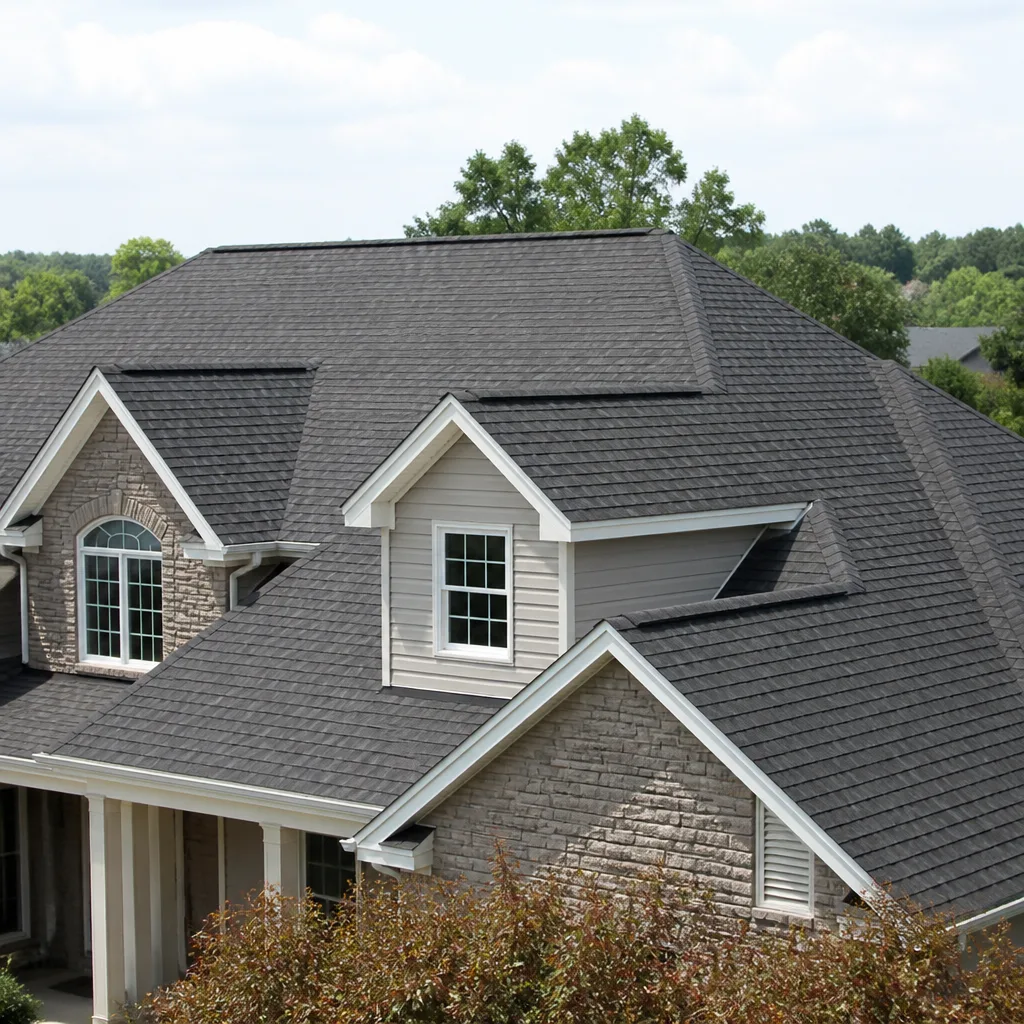
- Class A roofing. In California, Class A is the minimum standard for new construction in VHFHSZ zones, but many older Temecula homes still have Class B or C roofs, or roofs made of untreated wood shake. Class A materials include asphalt fiberglass composition shingles, standing seam metal, clay tile, and concrete tile. Every shingle manufacturer Sycamore works with, including GAF, CertainTeed, and Owens Corning, offers Class A assemblies. The critical detail is the underlayment and edge details, not just the surface material.
- Ember-resistant vents. Your attic needs ventilation. Embers exploit every vent opening. The fix is 1/8-inch corrosion-resistant metal mesh screening over all attic, eave, and crawl space vents, or replacing standard vents with ember-resistant models that meet ASTM E2886 testing standards. This is a $200 to $600 fix that addresses the most common wildfire ignition point in Temecula homes.
- Defensible space construction. This is not just clearing brush. It’s about the hardscape immediately surrounding your house. A 5-foot noncombustible zone, using gravel, concrete, or pavers, should extend from the foundation on every side. In the 5 to 30-foot zone, replace combustible mulch with stone, and keep any wood structures (fences, decks, trellises) from touching the house. Fencing that connects to a house in a VHFHSZ should have a metal gate or metal panel section at the connection point so a burning fence does not transfer fire to the wall.
- Siding and exterior walls. James Hardie fiber cement siding is noncombustible and carries a Class A flame spread rating. In Temecula, where many eastern homes have original wood or vinyl siding, replacement with fiber cement is one of the highest-impact hardening decisions you can make.
Flood and Drainage Preparedness for Murrieta Creek and Wine Country Arroyos
Murrieta Creek is the drainage spine of western Temecula. Warm Springs Creek feeds it from the northeast. The arroyos that cut through Wine Country, including those along De Portola Road and Calle Contento, are dry most of the year but turn into high-velocity channels during atmospheric river events. The 1993 floods, the 2019 Valentine’s Day storm, and the January 2023 atmospheric river event all produced water moving fast enough to undercut banks, scour bridge footings, and flood low-lying parcels. Properties in the Harveston area, along Ynez Road near the creek, and in the older floodplain zones west of the 15 are the most exposed.
Construction-level flood preparedness is different from sandbagging. Flood fighters stack sandbags before a storm. Prepared homeowners build drainage capacity that works during the storm:
- Gutters and downspouts sized for peak flow. Standard 5-inch gutters are undersized for Temecula’s most intense rain events. If your roof area exceeds 1,500 square feet, 6-inch gutters with 3×4-inch downspouts move water away from the foundation faster. Downspout extensions should discharge at least 10 feet from the foundation, and they should terminate over a splash block or into a buried drain line, not onto bare soil.
- Grading that slopes away from the structure. The dirt around your foundation should drop 6 inches over the first 10 feet. This is the single most important drainage defense, and it’s surprising how many Temecula homes, especially those built in the 1980s and 1990s on cut-and-fill lots, have flat or negative grading around the perimeter.
- Foundation waterproofing and exterior drainage boards. If you’re already doing exterior work, this is the time to add an exterior waterproofing membrane and dimple drainage board to any below-grade foundation walls. Homes with basements or sunken living areas in the older Temecula townsite are particularly vulnerable to hydrostatic pressure.
- Arroyo-adjacent setbacks. If your property line touches an arroyo or creek channel, you need to know where the 100-year flood plain fall on your lot. FEMA maps are public, but they’re also years out of date. A local contractor familiar with Temecula’s drainage patterns can tell you whether your property has been observed to flood during recent storms, even if the maps say you’re in a low-risk zone.
Multi-Hazard Materials: Systems That Perform Across Fire, Seismic, and Water Events
The most expensive mistake Temecula homeowners make is hardening against one hazard while creating vulnerability to another. A heavy clay tile roof is fireproof but adds seismic mass that increases lateral loads on the structural frame. A wood deck creates a fire pathway but replacing it with a concrete slab affects drainage. The goal is multi-hazard resilience: materials and systems that perform acceptably across fire, seismic, and water events simultaneously.
Here’s what that looks like in specific product decisions:
Roofing. Standing seam metal roofing from manufacturers like CWS or ECO Window Systems performs across all three hazards. It’s Class A fire-rated, it’s lightweight (reducing seismic load), and it sheds water with fewer penetration points than shingle roofs. It also carries a 30 to 50 year lifespan, which matters in a city where the replacement cycle for asphalt shingles runs 15 to 20 years. If you prefer a shingle look, Class A composite shingles from GAF or CertainTeed offer the same fire rating with a lower profile, but they ship with more penetrations and require careful flashing to match metal’s water performance.
Windows and doors. Tempered glass is a seismic requirement for windows adjacent to doors and in large panels. Dual-pane tempered glass from manufacturers like CGI or ES Windows also provides a stronger barrier against wind-driven embers than single-pane annealed glass. After a wildfire ember storm, the difference between a breached window and a surviving one is often a matter of glass composition and frame material. Aluminum and fiberglass frames outperform vinyl in both high-heat and high-wind scenarios, which is relevant for Temecula’s eastern canyon properties.
Fencing. Wood fencing is a fire conveyor. Metal fencing, or wood fencing with metal sections at structural connection points, stops the transfer. The same principle applies to pergolas, trellises, and any wood structure attached to the house. In a seismic event, heavy masonry walls without proper footings become collapse hazards, while lightweight metal panel systems flex without failing. The multi-hazard choice is often a manufactured steel or aluminum system, not a site-built wood or masonry wall.
Temecula is a city where the ground shakes, the hills burn, and the creeks flood. Any material you choose for a major system, roofing, siding, windows, fencing, should be evaluated against all three.
Cripple Wall Retrofitting: What Temecula Homeowners Need to Know
A cripple wall is the short wall, typically 2 to 4 feet tall, that sits between the top of a concrete foundation and the first floor framing of a home. In a house with a raised foundation, the cripple wall bears the full weight of the structure. Under lateral seismic shaking, an unbraced cripple wall can shear off its connection points and collapse, dropping the entire house sideways. This is the most common structural failure in California earthquakes, and it’s responsible for the majority of residential damage in Elsinore Fault scenarios.
Cripple wall retrofitting is a well-defined engineering process:
- Foundation bolting. Anchor bolts are installed through the mudsill, the horizontal wood member sitting directly on the concrete, into the foundation at specified spacing, typically every 4 to 6 feet.
- Shear panel installation. Plywood panels, usually 15/32-inch or thicker, are nailed to the cripple wall studs to create shear walls that resist lateral displacement.
- Bracing and strapping. Metal connectors tie the floor framing to the cripple wall and the cripple wall to the foundation, completing a continuous load path from roof to foundation.
The cost in Temecula typically ranges from $4,000 to $9,000 for a standard single-story home, depending on access, foundation condition, and the number of shear panels required. It’s a one-time cost that permanently upgrades the structural integrity of the house. California’s Earthquake Brace + Bolt program offers grants up to $3,000 for qualifying homes, and many Temecula homeowners in pre-1980 neighborhoods like older Paseo del Sol and portions of central Temecula qualify. The program requires a licensed contractor to perform the work.
If you’re planning a Home Remodeling in Temecula project that opens up any portion of the ground floor, that’s the window to do the retrofit. The walls are already open, the access is already there, and the incremental cost drops significantly compared to a standalone retrofit.
Water Heater Strapping and Gas Line Safety
A full 50-gallon water heater weighs roughly 450 pounds. In a magnitude 6.5 earthquake on the Elsinore Fault, that weight becomes a lateral load that can snap a flimsy metal strap, tear flexible gas connectors, and tip the unit over. The water and gas lines rupture, and now you have a flood and a fire inside a house that’s already shaking. This is not a rare failure mode. It’s one of the most commonly documented post-earthquake damage patterns in Southern California.
California plumbing code requires water heaters to be anchored with two straps, one in the upper third and one in the lower third of the unit, attached to wall studs with lag screws. The straps must be rated for seismic resistance. Many older Temecula homes have either no straps, or straps installed with drywall screws, which pull out under load. The fix costs $200 to $400 and takes a plumber about an hour. Compare that to the cost of a gas leak in a post-earthquake house, and the math is obvious.
Gas line safety follows the same principle. Every gas appliance in a Temecula home should connect through flexible corrugated stainless steel connectors, not rigid black iron pipe. The flexible connectors absorb seismic movement without fracturing. Automatic gas shutoff valves, which trip when they sense significant ground acceleration, add another layer of protection. These valves cost $500 to $800 installed, but they prevent the exact scenario that turns an earthquake into a house fire. If you have a gas line, the recommendation is simple: strap the water heater, install flexible connectors, and consider an automatic shutoff valve.
Post-Emergency Contractor Engagement: Avoiding Predators After a Disaster
After a wildfire, flood, or earthquake, Temecula gets flooded with contractors. Some are legitimate. Many are not. The predatory pattern is predictable: out-of-state crews arrive within 48 hours, knock on doors, offer “free inspections” that find damage where there is none, demand large deposits, and either disappear or perform substandard work that fails the next inspection. This is so common that the California Contractors State License Board issues fraud warnings after every major disaster.
Here’s how to protect yourself:
- Verify the license before you talk. California requires a contractor license for any project over $500. Ask for the license number and check it on the CSLB website. If the contractor hesitates, walk away. A licensed Home Renovation in Temecula contractor will have the number on their business card, their truck, and their contract.
- Never sign over the insurance check. This is the classic scam. The contractor offers to handle everything, you sign the check over, and they pocket it or underpay for materials and walk. Work with your insurer directly and pay the contractor in stages tied to completed, inspected work.
- Document everything before remediation starts. Before any demolition or repair work, photograph every damaged area from multiple angles. Take video. Keep a written inventory. This protects your insurance claim against disputes about pre-existing damage and protects you against contractors who claim damage was worse than documented.
- Demand a written contract with a fixed scope. No verbal agreements. No handshake deals. A legitimate contractor will provide a written contract specifying the exact work, materials, timeline, and payment schedule. Fixed pricing with no change orders means the price you agree to is the price you pay, unless you decide to add scope.
If you’re dealing with post-disaster damage in Temecula, the fastest way to filter bad actors is to work with a locally established contractor who has a physical presence, verifiable local references, and a portfolio of completed work in the area. A contractor who has been working in Temecula neighborhoods for years has a reputation to protect. An out-of-state crew with a rental truck and a cell phone does not.
Pre-Disaster Documentation Checklist for Temecula Homes
The most important preparedness step costs nothing and takes an afternoon. Document your home’s condition before anything happens. This creates the baseline that makes post-disaster insurance claims faster, less contentious, and more likely to pay out at full value. Temecula homeowners who document thoroughly before a fire, flood, or earthquake recover faster and with lower out-of-pocket costs than those who don’t. The pattern is consistent across every disaster event the city has weathered.
Create a digital file, store it in the cloud and on a flash drive kept in a safe deposit box or offsite location. Include:
- Full exterior and interior video walkthrough. Narrate as you go. Open every door, every cabinet, every closet. Describe materials: “Granite countertop, custom cabinets, hardwood floor.” This becomes your proof of condition.
- Photographs of every room from multiple angles. Close-ups of high-value items: appliances, electronics, art, jewelry, tools, musical instruments.
- Receipts and serial numbers for major purchases. Roof materials, HVAC equipment, water heater, appliances, windows, flooring. If you don’t have receipts, photograph the model and serial number labels.
- A written inventory of the home’s systems. What type of roof, what age, what warranty. What type of siding. What type of water heater, and when it was installed. This level of detail speeds up both insurance claims and contractor estimates.
- Your property’s hazard zone designations. FEMA flood zone, Cal Fire VHFHSZ status, and distance from the nearest Elsinore Fault trace. This information shapes the type of damage most likely to occur and the type of remediation needed.
Update the documentation annually, or whenever you complete a major improvement. A home that’s documented is a home that can be restored. A home that isn’t documented becomes a negotiation with an insurer who has no reason to believe you.
Common Mistakes to Avoid
- Ignoring the cripple wall because the house “looks fine.” A cripple wall can be unbraced and look perfectly normal for 30 years, then fail in 30 seconds during an earthquake. Inspection is the only way to know your status.
- Treating wildfire hardening as a landscaping project. Clearing brush helps, but the house ignites from embers landing on the roof, the vents, and the siding. The construction hardening is what prevents ignition.
- Skimping on downspout extensions. A 3-foot downspout extension dumps water at the foundation. A 10-foot extension moves it away. This is a $50 fix that prevents foundation damage in Temecula’s heaviest storms.
- Assuming the FEMA flood map is accurate. Flood maps are based on historical data and modeling that ages quickly. The observed flooding in some Temecula neighborhoods during recent atmospheric river events is more instructive than a map drawn years ago.
- Hardening against one hazard while ignoring another. The homeowner who installs a heavy clay tile roof for fire protection without verifying the structural capacity for seismic loads has traded one risk for another. Every major system decision should be evaluated against all three hazards.
- Waiting until after a disaster to find a contractor. That’s when the predators arrive. Identify and vet a local contractor before you need one, so post-disaster you’re not making decisions under pressure.
- Not documenting your home’s condition. The difference between a fully paid insurance claim and a partial denial is often a matter of pre-disaster documentation. Do the walkthrough video. Take the photos. Store them offsite.
See the difference
 Before
 After
 Before
 After
 Before
 After
When to Call a Professional
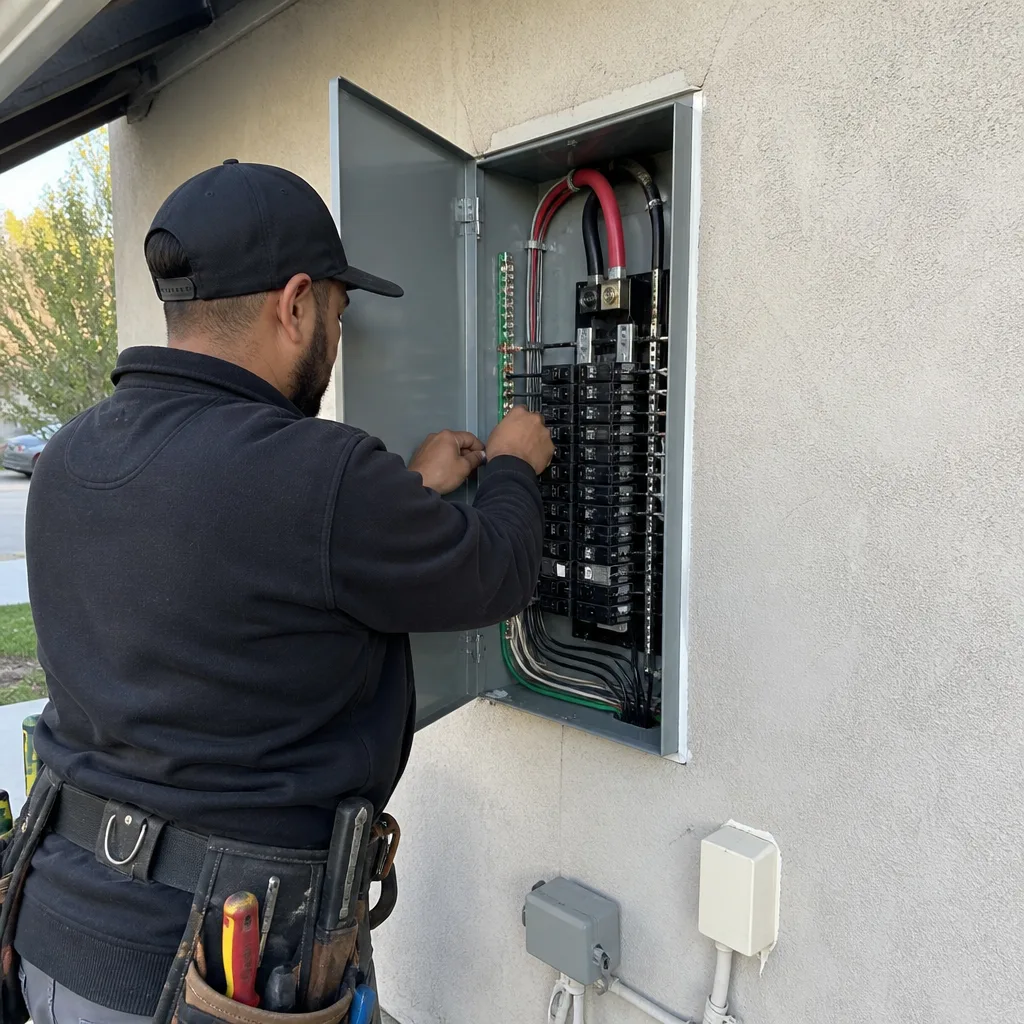
Seismic retrofitting, electrical panel upgrades, roofing replacement, and gas line work are not DIY projects. They require permits, licensed contractors, and inspections. If you’re in a pre-1980 home with an unbraced cripple wall, call a structural professional before doing anything else. If you’re replacing a roof in a VHFHSZ zone, fire code compliance is non-negotiable and requires a contractor who understands the local requirements. If your drainage system failed during a recent storm, a professional assessment can identify the grading, gutter, or foundation issue before the next one hits. Sycamore Contractors home offers free estimates in Temecula. Call (877) 265-6284 to schedule yours.
Frequently Asked Questions
The Elsinore Fault Zone runs within five miles of central Temecula, with the closest trace passing along the city’s eastern edge near the Wine Country boundary. A major rupture on this segment would produce strong ground shaking across every Temecula neighborhood. Homes built before 1980 without seismic retrofitting are the most vulnerable, particularly those with unbraced cripple walls. Call (877) 265-6284 for a structural assessment.
A cripple wall is the short wood-frame wall between the concrete foundation and the first floor, present in many raised-foundation homes built before 1980 in Temecula. Without plywood shear panels and foundation bolts, these walls collapse sideways during earthquakes. The only way to know if your cripple wall is braced is a physical inspection of the crawl space. Retrofitting costs $4,000 to $9,000 for a typical single-story home.
Yes, for properties in Very High Fire Hazard Severity Zones (VHFHSZ) in Temecula’s eastern hills and Wine Country areas. California law requires Class A roofing, ember-resistant vents, and defensible space construction on new builds and major remodels in these zones. The 2023 Cal Fire zone updates moved thousands of Temecula parcels into higher hazard categories, so properties that were previously outside VHFHSZ boundaries may now be included.
The highest flood risk in Temecula is concentrated along Murrieta Creek, Warm Springs Creek, and the arroyos that drain the eastern Wine Country basin. Properties in the Harveston area, along Ynez Road near the creek crossing, and in the older floodplain zones west of Interstate 15 have historically flooded during atmospheric river events. However, drainage problems can affect any property with poor grading or undersized gutters. Call (877) 265-6284 for a drainage assessment.
Seismic retrofitting runs $4,000 to $9,000 for a standard cripple wall retrofit. Water heater strapping costs $200 to $400. Ember-resistant vents cost $200 to $600 for a typical attic. Class A roof replacement varies by material and home size, but metal roofing from manufacturers like CWS and ECO Window Systems typically runs $18,000 to $35,000 in Temecula. Drainage improvements run $3,000 to $12,000 depending on scope.
No. That’s exactly when predatory contractors flood the market, and you’ll be making decisions under pressure with limited information. Vet a local contractor now, establish the relationship, and document your home’s condition before anything happens. That way, if disaster strikes, you’re making one phone call to someone you already trust, not sorting through door-knockers.
The Bottom Line
Temecula sits at the intersection of three hazards: a fault line within five miles of downtown, wildfire zones covering the eastern hills and Wine Country, and flood-prone arroyos feeding the creeks that run through the city. Most preparedness advice treats these as separate problems, but the real threat is their interaction. A house that survives the fire still has to withstand the quake that follows. A foundation compromised by flooding is more vulnerable to seismic failure. The houses that fare best are the ones built or retrofitted with this integrated understanding in mind: Class A materials, seismic bracing, proper drainage, and documentation. Start with the inspection. The rest follows. Sycamore Contractors offers free estimates in Temecula. Call (877) 265-6284.
Written by the team at Sycamore Contractors, serving Temecula since 2018.