
Last updated October 31, 2026
 Home additions & ADU
 Kitchen remodeling
 Bathroom remodeling
 Roofing
 Windows & doors
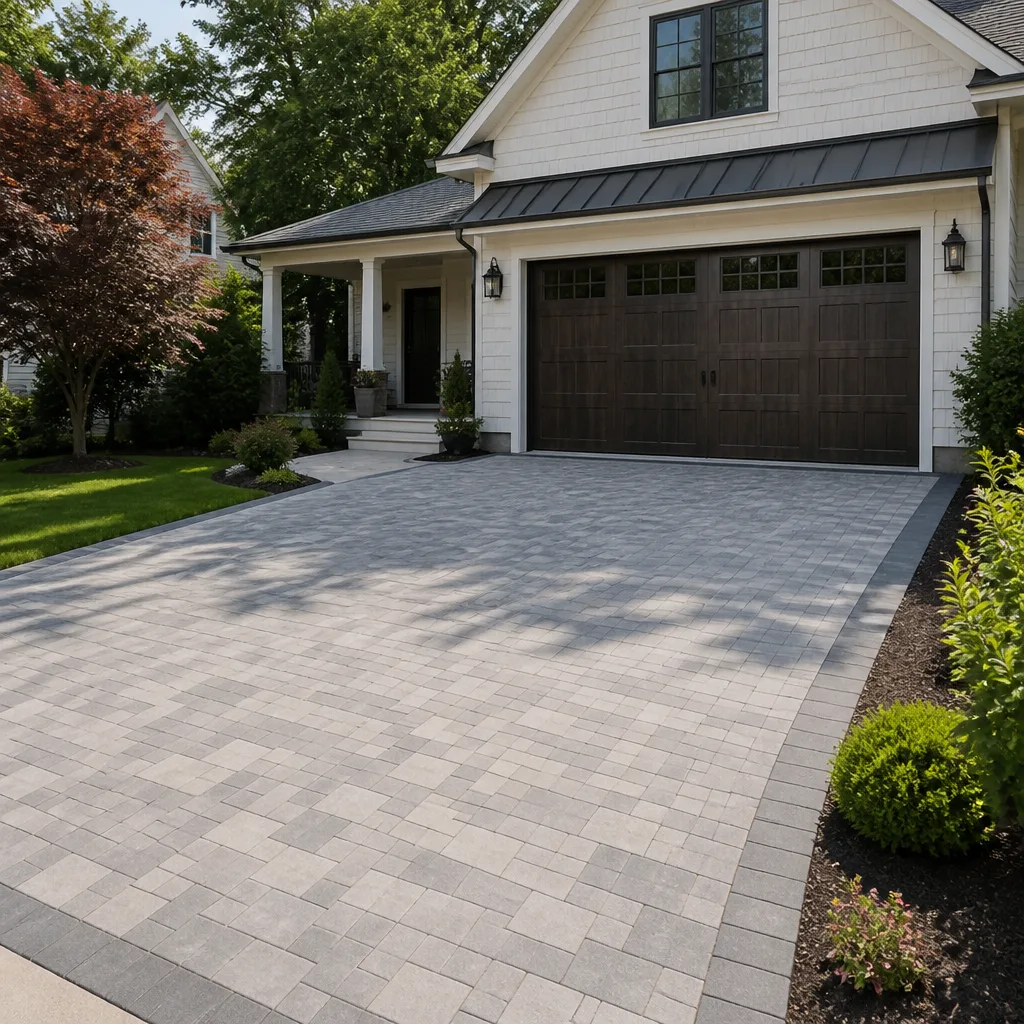 Driveway & pavers
 Fence
Free written scope consultation - allowances, timeline, and change-order rules on paper before a single trade is scheduled
General Contractor Maintenance Checklist for Temecula Homeowners
Temecula averages 278 sunny days a year. That sounds like a selling point, and for most of the year it is. But that UV load at inland elevation, roughly 1,000 feet above sea level, degrades exterior coatings about 20% faster than the same paint or sealant would fail in a coastal city like Oceanside or Carlsbad. The sun here works harder. So does the wind. So does the soil. A generic Southern California maintenance checklist will miss the specific failure points that Temecula homes actually develop. This guide is built around what breaks first in this valley, and what to check each season before small problems become five-figure repairs.
Quick Answer
A proper Temecula home maintenance routine means inspecting west-facing elevations every spring and fall for UV and wind damage, checking concrete tile roof fasteners after major Santa Ana wind events, calibrating HVAC service for both summer heat and winter valley-floor cold, monitoring clay soil movement around foundations and flatwork annually, and timing gutter and irrigation maintenance to the fire season. Most of these checks take under an hour each and prevent the damage patterns we see repeatedly across Temecula, from Redhawk to Paseo del Sol. If you only do one thing each year, make it the west elevation walkthrough in October.
Styles & brands we work with
Table of Contents
- The West Elevation Protocol
- Clay Soil and Foundation Movement
- The HVAC Maintenance Calendar
- Concrete Tile Roof Checks After Wind Events
- Irrigation, Drainage, and Fire-Safe Clearance
- Paint and Sealant Cycles in Inland UV
- The Seasonal Schedule
- Common Mistakes to Avoid
The West Elevation Protocol
The west side of a Temecula home takes a beating that the east side never sees. Afternoon sun pounds it with the highest UV angles of the day. The Santa Ana winds, which typically blow from the northeast in the fall, actually create a pressure differential that wraps gusts around the southern and western exposures. Between Murrieta and the Temecula Pass, wind-driven dust and fine grit sandblast paint, window glazing, and caulk lines on west-facing walls at a rate that surprises homeowners who moved here from coastal areas. In our experience, west-facing paint fails two to three years before paint on the north or east side of the same house.
Here’s the check sequence we recommend every spring and fall:
- Walk the entire west elevation with a pair of binoculars in hand. Start at the roofline and work down. Look for lifted shingles or cracked tiles at the eave line where wind gets under the roof edge first.
- Check all caulk and sealant lines around windows and doors on the west side. Press a fingernail into the caulk. If it feels hard, chalky, or pulls away from the siding, it’s lost its working life. In Temecula’s UV, acrylic caulk on west-facing windows often fails within five years.
- Inspect window screens on the west side for pinholes and tears. Wind-carried sand from the Pass wears out screens the same way it wears out paint, and damaged screens become an entry point for insects once the late summer heat pushes them toward cooler interiors.
- Look at paint sheen on the west wall compared to the east wall of the same house. If the west side looks flat or chalky while the east side still has sheen, the west side is roughly two years from failure. It is cheaper to repaint a west wall early than to repair rotted fascia and trim boards after the coating fails completely.
- Check exterior light fixtures on the west elevation for UV-brittle plastic housings and corroded bulbs. Temecula’s hot west-wall microclimate shortens the life of builder-grade fixtures significantly.
If you are already thinking about exterior work, General Contractor services can help ensure a full re-skin with a fiber cement product like James Hardie siding handles Temecula’s west-side UV and wind load better than most wood-based options. The material is engineered for exactly the kind of hot, dry, windy exposure that the west walls of Temecula homes face. But even without a full siding replacement, the seasonal walkthrough will catch failures early enough to keep repair costs reasonable.
Clay Soil and Foundation Movement
Temecula sits on expansive clay soil across much of the valley floor and into the older foothill neighborhoods. Expansive clay swells when it gets wet and shrinks when it dries. That means the ground under your foundation is moving, seasonally, more than the ground under a typical coastal or desert home. The winter rain cycle saturates the clay. The long dry season bakes it into contraction. Over time, that repeated swell-shrink cycle can open hairline cracks in slab foundations, shift flatwork, and cause exterior doors to stick or refuse to latch. This is not a sign of a failing home. It is the normal behavior of the soil Temecula is built on. But it does require a maintenance eye.
- Inspect the exposed foundation edge around the perimeter of the home twice a year, once after the rainy season and once in late summer. Look for new cracks wider than a quarter inch, vertical displacement, or crumbling exposed concrete.
- Check flatwork joints: driveways, walkways, pool decks, and patios. Concrete flatwork moves independently of the foundation. Joints that have closed up in winter will open in summer. Note any slabs that show more than a half inch of differential movement from season to season.
- Test exterior doors monthly. A door that sticks in summer and swings freely in winter is responding to soil movement, not to a bad hinge. If the door was hung properly, seasonal stick-slip at a stable range is something you live with. If it gets worse every year, the soil movement is transferring load to the door frame and the underlying slab should be assessed.
- Check downspout discharge points. Expansive clay is at its most destructive when water concentrates at one spot next to the foundation. A downspout that drains within three feet of the slab invites differential swelling under one section of the foundation while the rest stays dry. That differential movement is what causes real structural cracking.
- Look at the soil grading around the foundation. Temecula’s hot summers dry the soil away from slab edges, creating a visible gap between dirt and concrete. That gap is normal in August. What matters is whether the soil re-expands to contact the slab edge after the winter rains. If it does not, the soil may have been over-compacted or improperly backfilled at construction, and it may be worth having the grade corrected before the next wet season.
Most foundation movement in Temecula is chronic and manageable rather than acute and catastrophic. The goal is to catch differential movement, the kind that moves one corner of the house more than another, early enough to correct drainage or grading before interior sheetrock cracks start appearing. For homeowners considering an addition or a full home remodeling in Temecula project, knowing how your specific lot handles the clay cycle is worth discussing with a contractor before you add square footage and new slab area.
The HVAC Maintenance Calendar
Temecula has a dual demand season that confuses generic HVAC maintenance schedules. Coastal homes cool down at night in summer, which gives compressors a break. Temecula does not. July and August nights sometimes stay above 70 degrees, so the AC runs through the dark hours. Then winter arrives, and the valley floor cold snaps, particularly in neighborhoods along Temecula Creek and in the lower elevations of Wolf Creek, push heat pumps and furnaces into near-daily service from late November through February. The system logs roughly twice the annual runtime hours of a coastal equivalent.
Here is the schedule that matches how Temecula HVAC systems actually work:
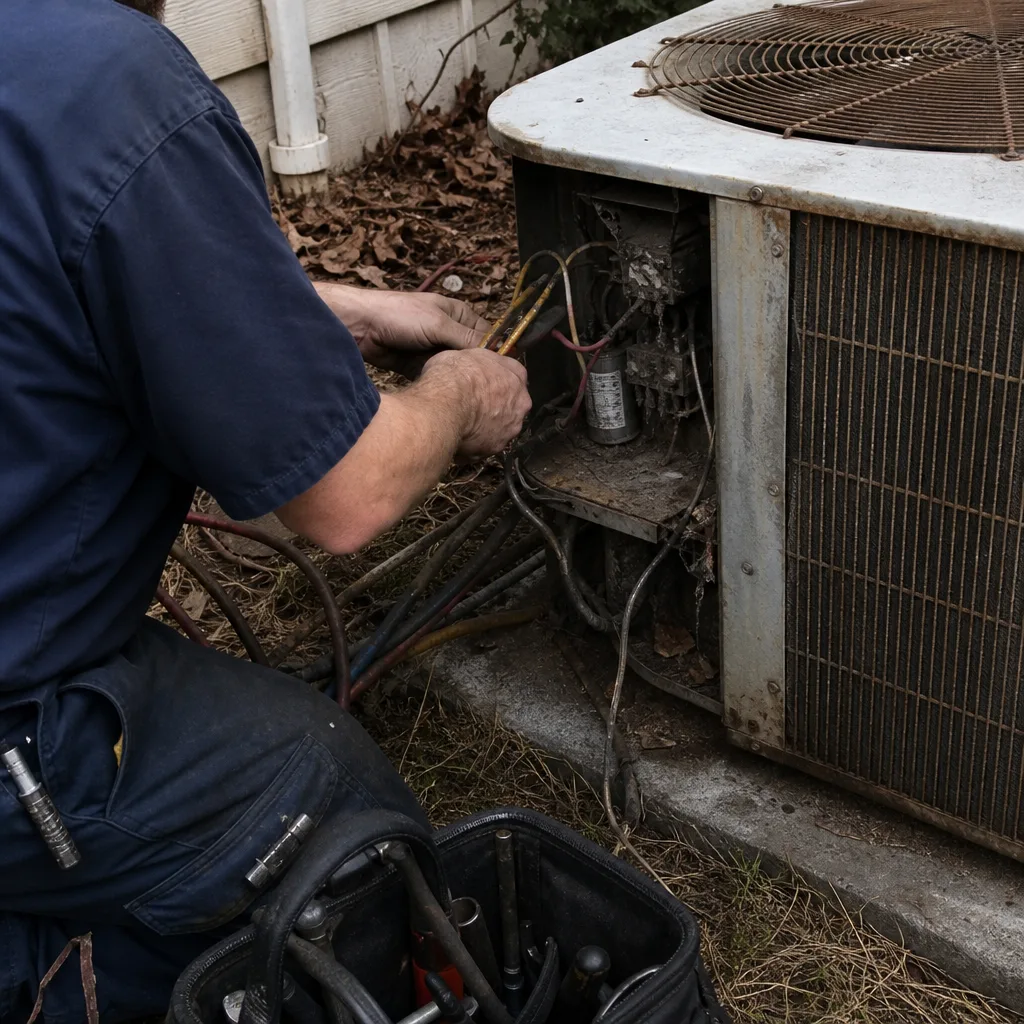
- Schedule a professional HVAC service in late August or early September, before the dry season heat peaks. The system has been running nightly for two months by that point. Coils are dirty. Filter pressure drop is measurable. Catching a failing capacitor in September is far better than discovering it on a 110 degree afternoon in October.
- Inspect and replace the filter on a schedule, not a calendar. If you run the system year-round as many Temecula homes do, check the filter every 30 days during peak summer and winter demand. A 30 day check does not mean a 30 day replacement, but the check tells you how fast dust and pollen are loading the filter in your specific location.
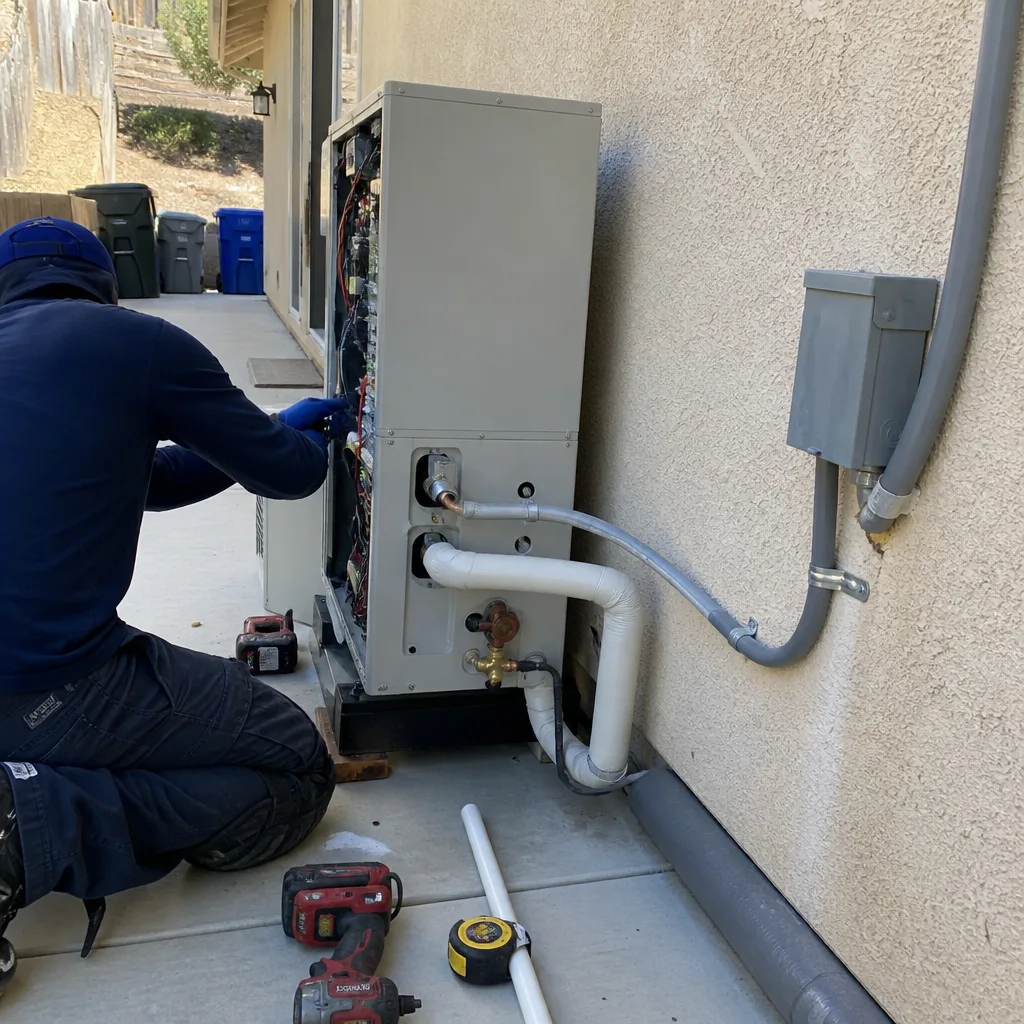
- Clean the outside condenser coil twice a year, once in spring and again in early fall. Temecula’s wind carries grit and fine dust that packs into condenser fins and raises head pressure, which shortens compressor life. The condenser on the west side of a home in Temecula takes more of this loading than any other location.
- In winter, check the outdoor heat pump unit for leaf and debris buildup from the fall wind season. The same Santa Ana winds that carry grit into coils also drive leaves and dried plant material into the base pan of the unit. A clogged base pan holds water against the lower coil and accelerates corrosion.
- Test the system’s defrost cycle once each winter on a morning when the outdoor coil shows frost. If the unit does not defrost within ten minutes, or if it defrosts and then refreezes quickly, the system is either low on refrigerant or has a failed defrost control. Both problems worsen quickly if ignored.
Ductwork in Temecula attics gets hot. Really hot. Attic temps in the summer regularly exceed 135 degrees in unvented or poorly vented attics, and that heat conducts into the ductwork and forces the system to work harder to deliver cool air. If you have not had the ductwork inspected, particularly the joints and seams in the attic runs, the gaps that form naturally over time leak conditioned air directly into the hottest part of the house. Sealing and, where justified, replacing the ducts can cut peak summer energy use significantly.
Concrete Tile Roof Checks After Wind Events
Concrete tile is the dominant roof type in Temecula tract homes, and for good reason. Tile handles UV and heat better than asphalt shingle. But concrete tile roofs have a specific failure mode in wind events, and the failure is rarely visible from the ground. The tiles themselves are heavy and rarely blow off. What fails is the underlayment underneath, and more commonly, the fasteners that hold the tiles to the battens. The wind blows rain up under the tile laps at exactly the angle that put water in places the original install never tested.
After any Santa Ana event with gusts above 40 mph, which Temecula sees several times each fall, do this:
- Walk the property perimeter with binoculars and look at the roof from multiple angles, particularly the ridge line, eaves, and the hip lines where tiles change plane. Look for tiles that sit proud of their neighbors, shifted tiles, or tile edges that no longer align with the courses below them.
- Check the roof-to-wall transitions where the roof meets stucco, siding, or chimney. These flashings take the brunt of wind-driven rain. Look for lifted flashing, exposed sealant, or visible gaps between the flashing and the wall surface.
- Look for concrete tile crumbs or fragments in the gutters and at downspout elbows. Crushed or cracked tile fragments in the gutters after a wind event mean tiles were slapping together, which is a sign of loosened battens or missing fasteners above.
- Inspect the underside of the eaves from inside the attic space after a heavy wind-driven rain. Look for water staining on the underside of the roof deck, damp insulation, or drips along the rafter tails. Wind-driven rain under tile can wet the underlayment without ever showing a leak inside the living space until the underlayment is far gone.
- If the home has a tile roof over 20 years old, schedule a professional roof inspection at least once every two years regardless of whether you see visible damage. The underlayment on an older tile roof is the vulnerable layer, and it is invisible from the ground and from inside until it fails.
One advantage of working with a general contractor in Temecula who handles roofing is that the roof inspection happens alongside the exterior wall inspection, not as a separate trade call. A roofer looks at the roof. A general contractor looks at how the roof interfaces with the walls, the windows, the siding, and the drainage. Those interfaces are where wind-driven failures begin.
Irrigation, Drainage, and Fire-Safe Clearance
The Santa Ana wind season in Temecula runs roughly from September through January, with the worst events typically clustered in October and November. The wind hits when the landscape is at its driest after the long summer, and it carries embers, fine debris, and dust at speeds that push fire risk into the high and extreme categories. The intersection of irrigation system function, gutter debris load, and fire-safe clearance is a maintenance triangle that most homeowners address as three separate problems. They are one problem in Temecula.
- Clean gutters and downspouts in late September, before the Santa Ana season peaks. A gutter packed with summer-dried leaves and pine needles becomes a fire ignition strip along the roof edge. Wind-driven embers land in the gutter, find dry tinder, and burn directly against the fascia board and the roof edge.
- Inspect all irrigation system zones at the start of the wind season. Look for broken heads, leaking valves, and clogged drippers. A landscape that is under-watered in October is a fire load. A landscape that is over-watered in October, with water running off into the gutters or pooling at the foundation, creates a different problem with the expansive clay.
- Maintain the fire-safe zone, the first five feet around the home, throughout the wind season. This means no combustible mulch against the siding, no dry shrubs within a few feet of windows, and no stacked firewood on a deck or against the house. Embers collect at the base of walls and in the gap between the siding and the ground. The standard fire-safe clearance guidance applies directly to how a homesite is maintained in Temecula’s wildland-adjacent tracts.
- Check drainage channels and swales after the first real rainy season storm, typically in November or early December. The summer dry season does not just dry out the landscape, it hardens the top layer of soil so that the first significant rain runs off fast rather than soaking in. A swale that has partially filled with sediment over summer will divert water toward the foundation instead of away from it.
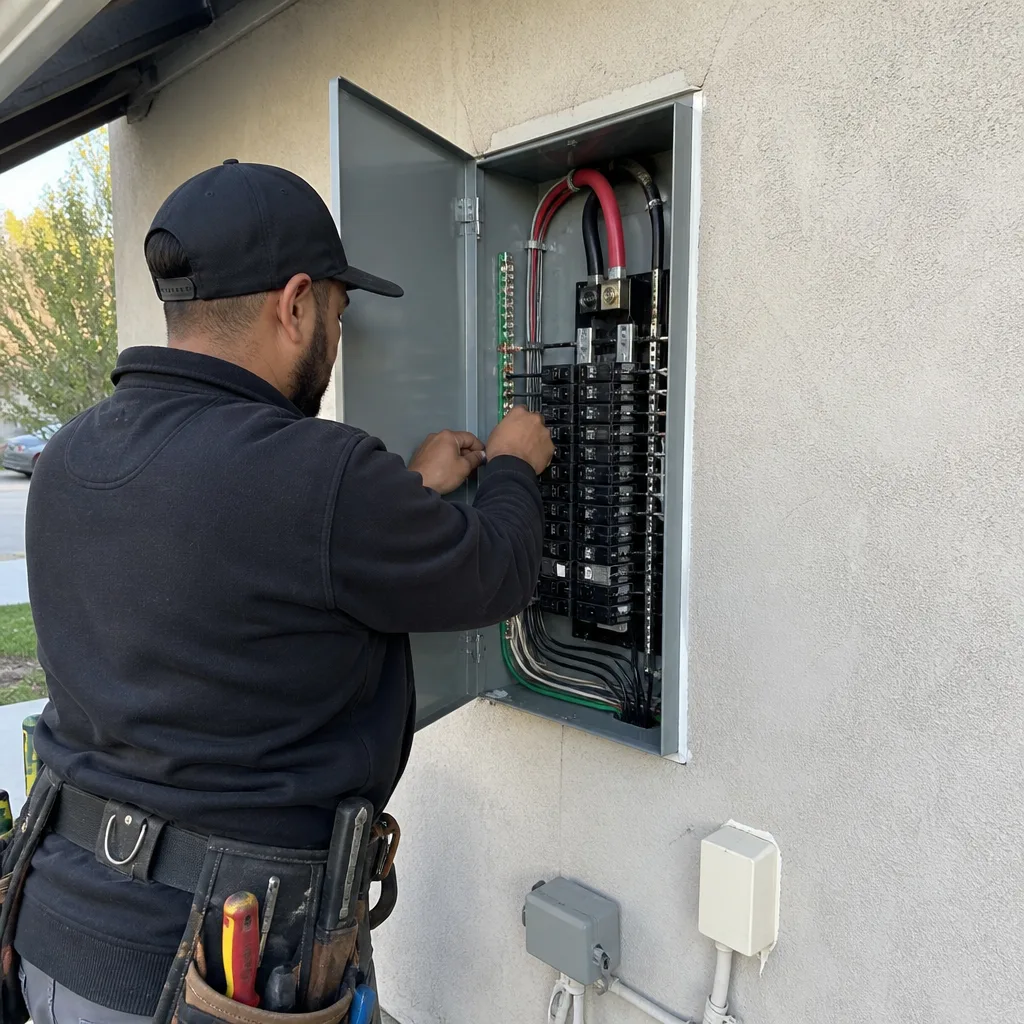
- Verify that all exterior electrical outlets, including the ones for the irrigation controller and any exterior landscape lighting, are weather-protected and GFCI functional before the wind season. A tripped GFCI that kills the irrigation controller during the dry season leaves the landscape without water at exactly the wrong time.
The connection to hardscaping is worth noting here. A well-built paver patio or walkway with proper drainage does more than look good. It channels water away from the foundation and reduces the amount of bare soil that dries out and shrinks away from slab edges each summer. If you are planning hardscape work anyway, the drainage function should be part of the design conversation from the first bid, not an afterthought.
Paint and Sealant Cycles in Inland UV
Paint in Temecula fails differently than paint in San Diego or Los Angeles. The UV load at a thousand feet of elevation is measurably higher, and the temperature swing between day and night in the summer, sometimes 40 degrees or more, causes more thermal expansion and contraction of the siding and trim than a coastal home experiences. That cycling breaks the bond between paint and substrate earlier. It also causes the paint film itself to chalk and powder sooner.
Here is what the cycle looks like on most Temecula homes:
- West-facing and south-facing paint fails first. The west side gets the hotter afternoon sun. The south side gets the longest daily exposure. Expect both of these planes to need repainting two to three years before the north and east sides.
- Caulk and sealant failure at window and door perimeters happens before the paint film fails over the painted surfaces. The thermal movement is concentrated at penetrations and joints. When caulk cracks or pulls away, it lets water behind the paint film and water behind the paint film is what causes peeling and rotted trim.
- Dark paint colors fail faster than light colors, and the difference is pronounced in Temecula’s sun. A dark navy or charcoal on a west-facing wall absorbs so much heat that the surface temperature can exceed 150 degrees on a summer afternoon. That heat accelerates the degradation of the resin binder in the paint. If you want a dark color, plan for a shorter repaint cycle on south and west exposures.
- The stucco on most Temecula homes is a different failure story than the trim boards. Stucco itself does not degrade under UV, but the paint on stucco does. The failure shows up as chalkiness first, then as thinning paint that exposes the sand aggregate. Once the aggregate is exposed, the paint is fully consumed and the stucco starts absorbing water directly.
- Builder-grade paint on new tract construction in Temecula often fails on the west elevation within five to seven years. Repainting with a premium exterior acrylic paint, properly applied after correct surface prep, extends that to eight to ten years. The cost difference is in the prep labor, not the paint material itself.
The same elevated UV load applies to more than just paint. Window seals, weatherstripping, door sweeps, and exterior light fixtures all degrade faster here. A maintenance schedule built for coastal California will chase these failures too late. When the time does come for a full exterior refresh, the same decision process applies. Materials like James Hardie fiber cement siding, which is how many Temecula homeowners choose to re-side west-facing elevations that keep failing in paint, handle the UV cycling better than wood-based siding products. The decision comes down to whether you want to repaint on a shorter cycle or replace the substrate with something that extends the cycle.
The Seasonal Schedule
Here is the full seasonal sequence, compressed into a single reference. Print it, tape it to the inside of a garage cabinet, and run through it four times a year.
Spring (March – April)
- Walk the west elevation. Check caulk, paint, window screens, and light fixtures for winter damage.
- Inspect the foundation perimeter for new cracking or displacement after winter rains.
- Clean the exterior condenser coil before the cooling season starts.
- Test the irrigation system zone by zone and repair leaks before the heat arrives.
- Check the roof from the ground for tile shift or flashing damage from winter wind.
Summer (June – August)
- Check the HVAC filter monthly. The system is running nightly and loading the filter faster.
- Monitor exterior doors for seasonal sticking from clay soil contraction.
- Look for soil pulling away from the slab edge. A gap of more than a half inch in late summer is worth noting and comparing to the post-rain condition.
- Verify that all exterior GFCI outlets are working. The irrigation controller depends on one of them.
Fall (September – November)
- Clean gutters and downspouts before the Santa Ana wind season.
- Schedule the professional HVAC service. The system needs it before winter demand starts.
- Clear the fire-safe zone around the home perimeter.
- Walk the roof with binoculars after the first significant wind event and look for tile shift and flashing lift.
- Check drainage channels and swales before the first major rain.
Winter (December – January)
- Check the HVAC filter monthly again. Winter valley cold snaps push the system into daily heating cycles.
- Test the defrost cycle on a cold morning when the outdoor coil is frosted.
- Inspect the foundation perimeter after winter rains. The clay will be expanded and in contact with the slab edge again. Compare to the late summer condition.
- Look for moisture staining or dampness in the attic after wind-driven rain events.
- Inspect gutters again. Winter rain plus remaining leaf litter from the fall wind season is a clogging combination.
If you are already tracking maintenance for a home you are planning to renovate, the same schedule applies. A home renovation in Temecula should be informed by the failure patterns the house exhibits over a full seasonal cycle. Knowing that your west elevation paint fails on a five-year cycle, or that your south-facing doors stick every August, tells a contractor where the renovation budget should be concentrated.
Common Mistakes to Avoid
- Skipping the fall HVAC service because the AC worked fine all summer. Temecula’s dual demand season means the system is about to shift into daily heating mode. A system that limped through summer will fail faster in winter, and winter failures in a valley-floor cold snap are miserable and often more expensive to repair in an emergency call.
- Waiting for a leak to appear inside the house before checking the roof after wind events. By the time water shows up in the living space, the underlayment has been compromised for months. Tile roofs fail slowly and invisibly. The inside-the-house leak is the last symptom, not the first.
- Ignoring sticky or difficult exterior doors as a seasonal nuisance. A door that sticks in summer and loosens in winter is telling you that the soil under that part of the slab is moving more than it should. That is a drainage or grading issue, and it compounds every year it is ignored.
- Painting the west elevation with the same schedule and product as the east elevation. The west side needs paint two to three years sooner. When repainting, the west side is the place to invest in premium product and more thorough prep. Skimping on the west side just means repainting it again that much sooner.
- Letting the fire-safe zone lapse after the fire department does a spring inspection. The condition of the landscape changes through summer. Vegetation that was green and low in April is dry and tall in October. The wind season is when the fire-safe zone matters most, and it has to be maintained through the entire season, not just checked once.
- Running the irrigation system on the same schedule in winter as in summer. Overwatering in winter, when the clay is already expanded from rain, creates the swollen-soil condition that moves foundations and cracks flatwork. The irrigation controller has a winter setting for a reason.
See the difference
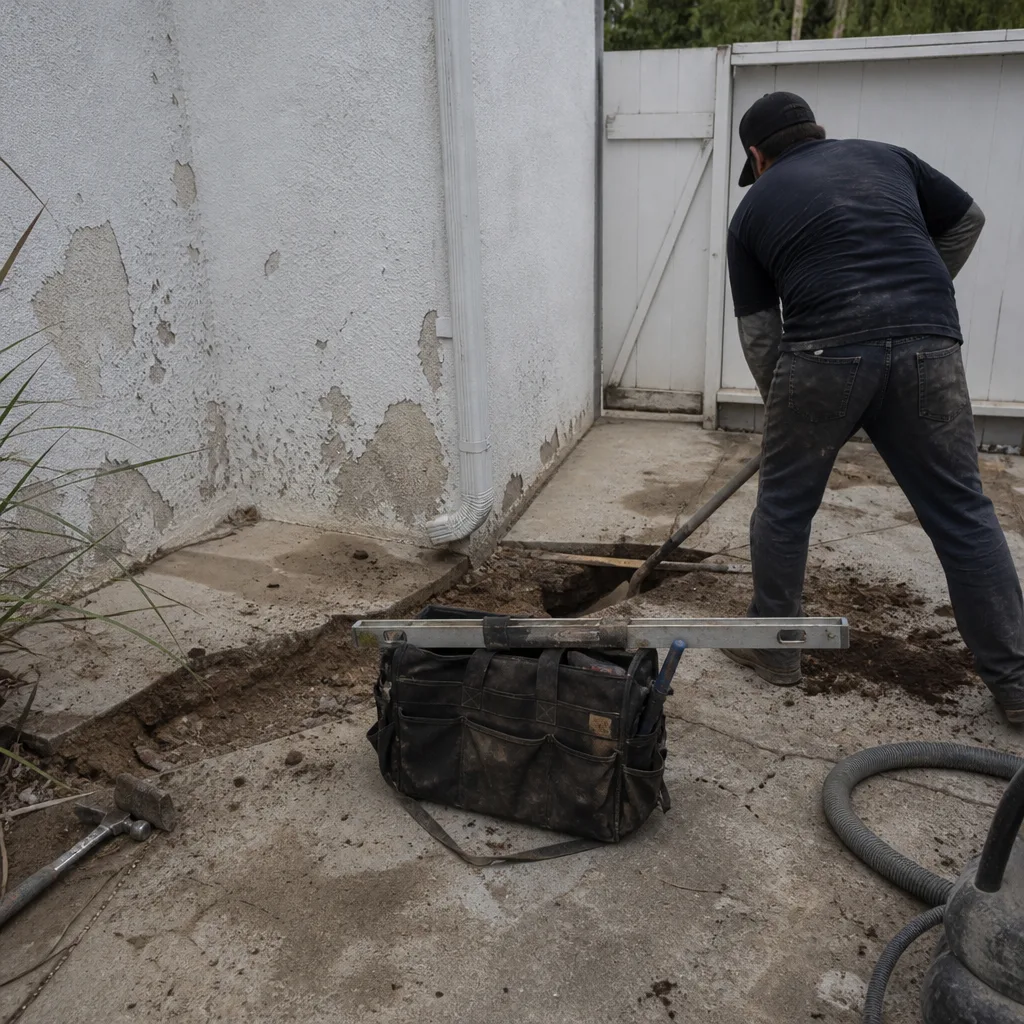 Before
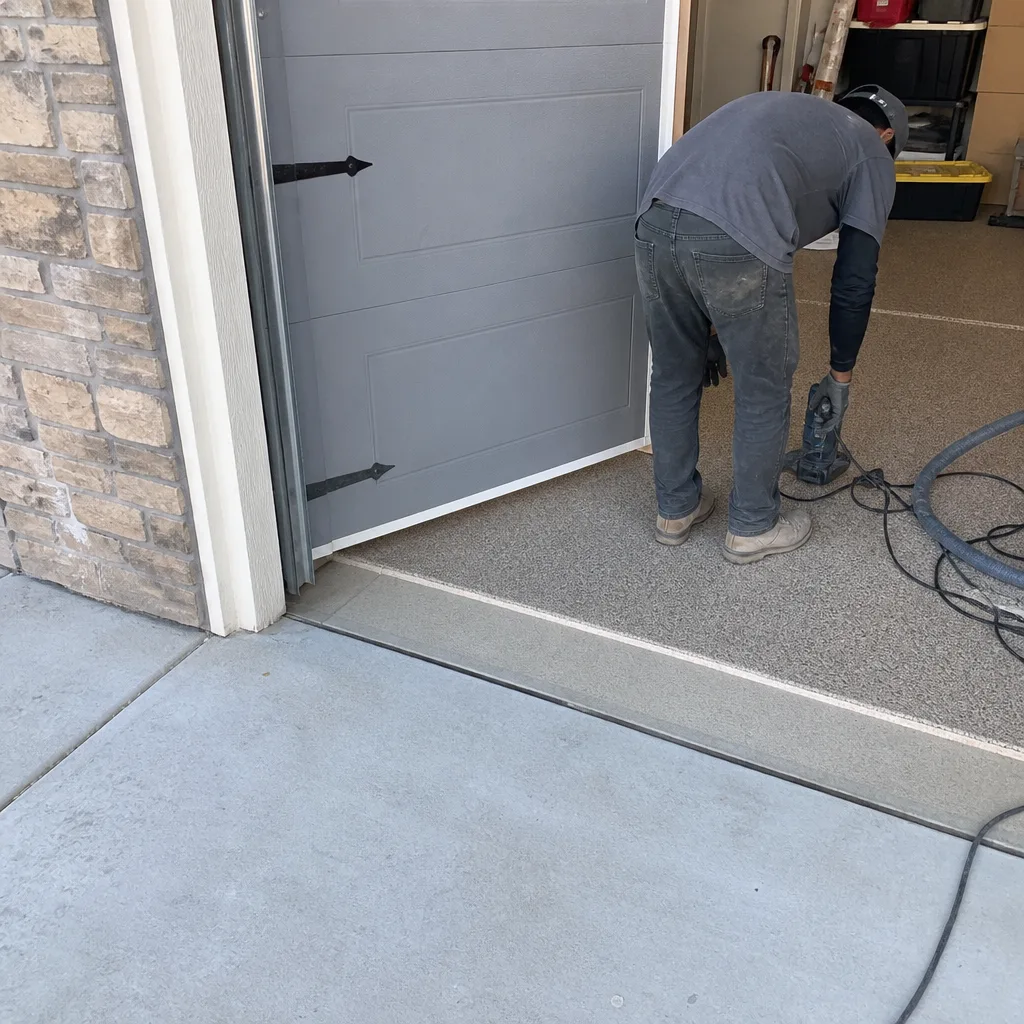 After
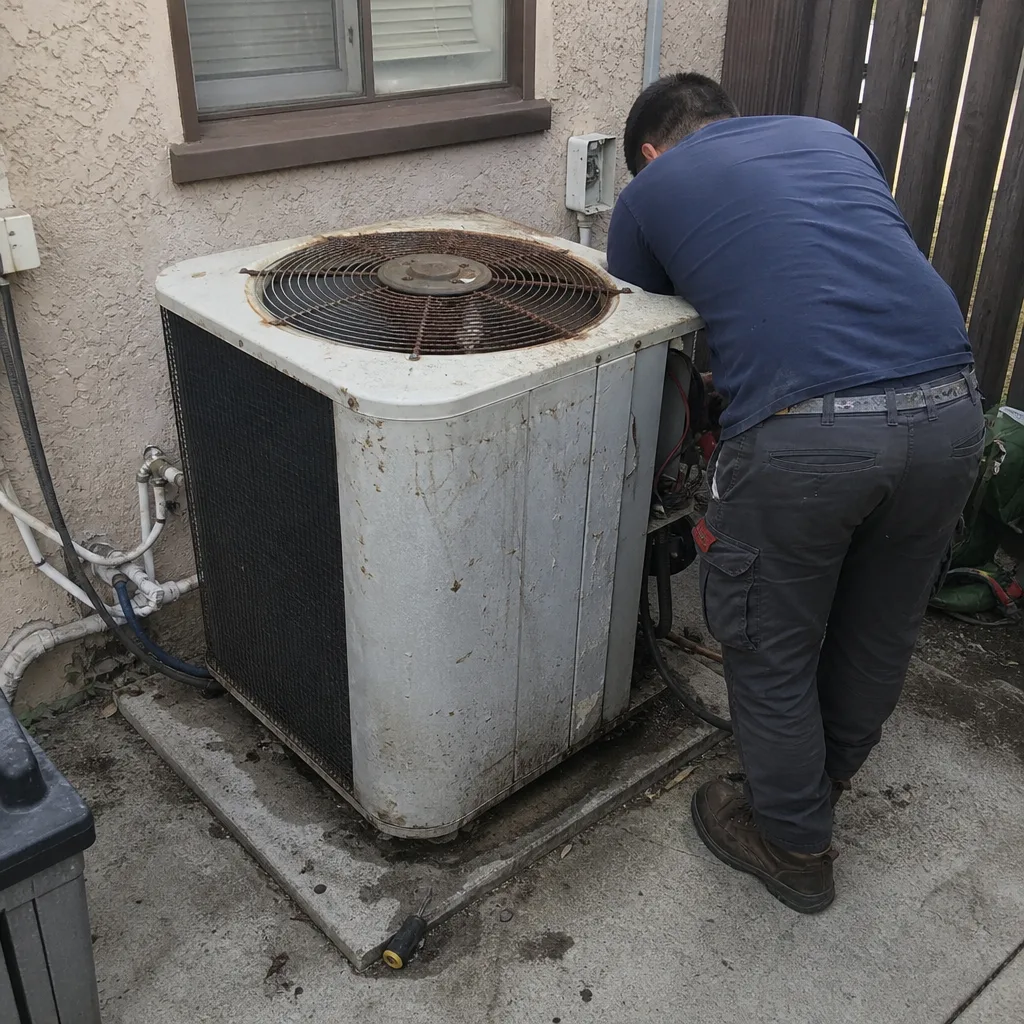 Before
 After
 Before
 After
When to Call a Professional
Most of the checks in this guide are things a homeowner can do with a pair of binoculars, a flashlight, and an hour of time, though our General Contractor Troubleshooting: Common Problems and How to Fix Them covers when to call in help. But some findings warrant a professional eye. If you see a foundation crack wider than a quarter inch with visible vertical displacement, if the concrete tile roof shows shifted tiles or lifted flashing after a wind event, if exterior paint is failing on the west elevation for the second time in under five years, or if the HVAC system is tripping breakers or failing to maintain temperature, these are not normal seasonal patterns. They are problems that get worse with delay. Sycamore Contractors offers free estimates in Temecula. We walk the property with you, point out what we see, and tell you what needs attention now versus what can wait. Call (877) 265-6284 to schedule a walkthrough. If you are planning a larger remodel anyway, the same walkthrough can anchor the scope and budget discussion for the entire project.
Frequently Asked Questions
Expect to repaint west and south facing elevations every 5 to 7 years with premium acrylic paint, while north and east elevations typically last 8 to 10 years. Temecula’s inland UV at elevation degrades paint roughly 20% faster than coastal San Diego or Orange County homes, so local repaint cycles run shorter than California averages. If you want an exact assessment of your specific exposure, call (877) 265-6284 and we will take a look during a free estimate.
The most common cause in Temecula is expansive clay soil shrinking during the dry season, which changes the load path under the slab and shifts the door frame enough to bind the door. If the sticking stays consistent from year to year, it is manageable. If it gets worse each summer, the drainage around the foundation likely needs correction. A full Sycamore Contractors home evaluation covers foundation, drainage, and grading as one system.
Yes. Concrete tile itself is nearly maintenance-free, but the fasteners, battens, and underlayment underneath it are not, and wind-driven rain from Santa Ana events stresses those hidden layers harder than anything coastal homes face. An inspection with binoculars after any 40 mph wind event, plus a professional roof inspection every two years for roofs over 20 years old, is the right cadence. A general contractor who handles general contracting in Temecula can inspect the roof and the wall interfaces at the same time.
Schedule professional service in late August or early September, before the heat peaks, and again in late November before winter valley-floor cold snaps arrive. Temecula’s dual demand season runs the system hard in both summer and winter, so two professional checkups per year catch failures before they happen in extreme weather. Between services, check the filter monthly during peak demand months.
Temecula follows California’s defensible space guidance, which focuses on the first five feet around the home, the area most likely to be touched by wind-driven embers, during the Santa Ana season. That means no combustible mulch against siding, no dry shrubs near windows, and no firewood stacked against the house from September through January. The wind corridor through the Temecula Pass makes this zone more important here than in many other parts of the county.
Normal seasonal movement from Temecula’s clay soil causes doors to stick and small hairline cracks to open and close with the seasons. Serious movement shows up as cracks wider than a quarter inch, vertical displacement where one side of a crack is higher than the other, or movement that gets worse every year instead of cycling. If you see those signs, call (877) 265-6284 for a professional assessment before the movement transfers to interior finishes.
The Bottom Line
Temecula homes fail in predictable ways, and most of the failures start with what the climate does to the west side of the house, the roof, the soil under the slab, and the HVAC system. The maintenance routine that protects this specific home in this specific valley is not complicated. It is consistent. Walk the west elevation every spring and fall. Check the roof after wind events. Service the HVAC before both demand seasons. Watch how the doors behave. Keep the gutters clean in October. None of these takes much time, and together they prevent the expensive surprises that turn routine maintenance into emergency renovation. The same kind of thinking applies when it is time to remodel, whether that means a kitchen with cabinets from brands like KraftMaid and countertops from Cambria, or a full exterior re-skin with a product like James Hardie siding, as detailed in our guide on How to Hire a Construction Contractor in Temecula: A Step-by-Step Guide. One contractor with visibility across every system, from the roof down to the flatwork, combined with brand-name materials you can research before you commit, makes the maintenance and renovation decisions simpler. Call (877) 265-6284 when you are ready to put a plan together.
Written by the team at Sycamore Contractors, serving Temecula since 2018. For more guides & resources, visit our blog.